-
WhatsApp / Mob : +86 156 5177 2521
-
Email : mrwin@cnbangwin.com
WhatsApp / Mob : +86 156 5177 2521
Email : mrwin@cnbangwin.com

Liquid Temperature of Oxygen: Complete Guide
Aug 19 , 2026
Under standard atmospheric conditions, oxygen is a gas
But at super low temperatures oxygen turns into a liquid.
The temperature of oxygen when liquefied is around -183 °C (which corresponds to −297 °F) at ambient pressure.
Liquid oxygen, known as LOX for short, is widely used in cryogenics due to its very low temperature of _269 °C.
Industries use liquid oxygen for:
l Steelmaking
l Chemical processing
l Medical oxygen supply
l Wastewater treatment
l Aerospace applications
l Industrial combustion
Training on only as recent as October 2023Understanding the phase-change temperatures of oxygen can guide engineers in choosing appropriate cryogenic equipment.
Nanjing Bangwin Gas supplies industrial gas producing plant and cryogenic oxygen plants.
Nanjing Bangwin Gas Official Website
Normal Boiling Point Data for Oxygen
-183°C (-297°F)
At this temperature, oxygen under 1atm of pressure goes from a liquid to a gas.
This temperature corresponds to (in Kelvin):
90 K
This means that, when it comes to cooling down to liquid oxygen temperature, an ordinary industrial refrigeration supply is simply not cold enough.
For comparison:
|
Substance |
Approximate Boiling Temperature |
|
Water |
100°C |
|
Carbon dioxide |
-78.5°C |
|
Liquid nitrogen |
-196°C |
|
Liquid oxygen |
-183°C |
So, boiling temperature of liquid oxygen is higher than that of liquid nitrogen.
Boiling Point and Freezing Point are the two most significant temperatures.
3.1 Oxygen Boiling Point
Oxygen boils at approximately:
-183°C (-297°F)
at standard atmospheric pressure.
Oxygen becomes gas when it absorbs enough heat to change its state from liquid.
Accordingly, storage tanks should have excellent thermal insulation.
3.2 Oxygen Freezing Point
Oxygen freezes at approximately:
-219°C (-362°F)
At temperatures below this oxygen is a solid instead of a liquid.
A lot of industrial systems need liquid oxygen at hotter than this temperature.
Standard Unit : Liquid Oxygen Temperature– The liquid oxygen temperature may occur in different units.
Celsius
-183°C
Fahrenheit
-297°F
Kelvin
90 K
Engineers of low-temperature systems typically use Kelvin as the unit of temperature.
And the boiling point of oxygen is relatively low since its molecules require very low temperatures to condense.
Cryogenic processes cool oxygen in industrial systems.
The general process includes:
l Air compression
l Air purification
l Heat exchange
l Cryogenic cooling
l Air separation
l Oxygen liquefaction
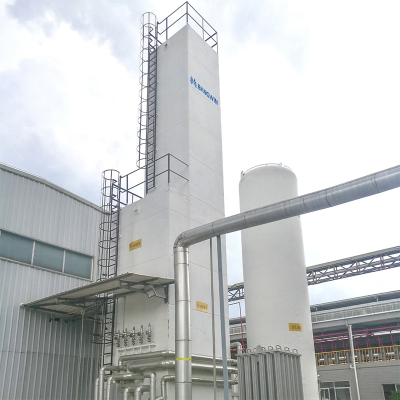
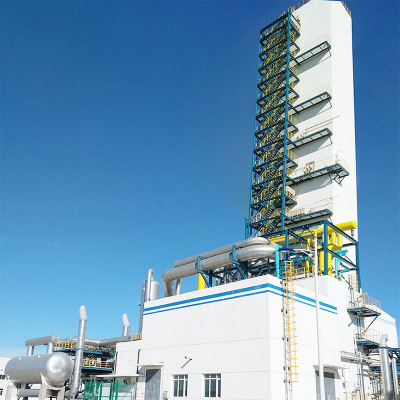
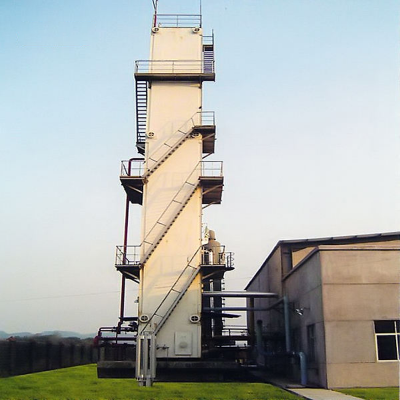
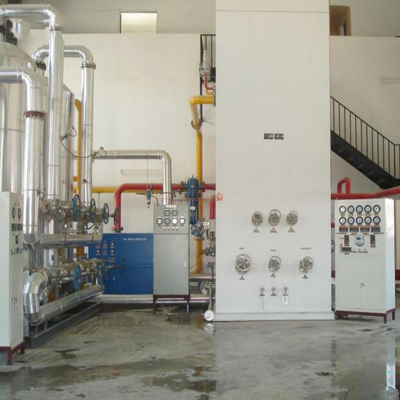
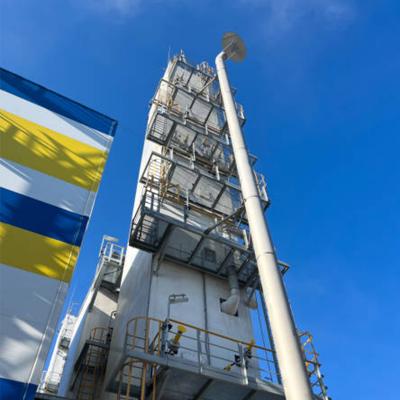
Cryogenic Air Separation Plant separates atmospheric air into oxygen, nitrogen and argon.
This process separates the gases at heat levels centered around and under −200 °C (−328 °F)[4] in order of their separate condensation sets.
Cryogenic Air Separation Plant
Air Separation Unit
Physical properties of liquid oxygen
|
Property |
Approximate Value |
|
Chemical Formula |
O₂ |
|
Boiling Point |
-183°C |
|
Freezing Point |
-219°C |
|
Appearance |
Pale blue liquid |
|
Boiling Temperature |
About 90 K |
|
Oxidizing Property |
Very strong |
Unlike nitrogen, oxygen is a very good supporter of combustion.
As a result, liquid oxygen must be much more carefully controlled when it is used.
6.1 Liquid Oxygen Is Pale Blue
Liquid oxygen is pale blue in color which makes it look very unique.
You can see this color because in its liquid state, oxygen reacts differently to light.
6.2 Liquid Oxygen Supports Combustion
Oxygen itself does not work as a conventional fuel.
However, it strongly supports combustion.
This is why in environments under increased levels of oxygen, materials can burn much more violently.
6.3 Liquid Oxygen Evaporates Quickly
Liquid oxygen draws heat from its environment.
Thus it takes the form of vaporized oxygen.
Proper insulation helps reduce evaporation.
For industrial production of liquid oxygen, cryogenic air separation is typically used.
Step 1: Air Compression
The system compresses atmospheric air.
Compressor Provides the air pressure for downstream processing.
Step 2: Air Purification
The system filters out the common impurities like:
l Water
l Carbon dioxide
l Hydrocarbons
This step protects cryogenic equipment.
Step 3: Cryogenic Cooling
This means that heat exchangers are designed to decrease air temperature step by step.
The cold energy from process streams is recovered by the system.
Step 4: Air Separation
cryogenic separation (distillation) system for oxygen from nitrogen and argon
This allows separation is by boiling point, since these gases will have different boiling points in controlled distillation.
Step 5: Oxygen Liquefaction
The system creates liquid oxygen.
The liquid oxygen that results is close to its boiling point in cryogenic form.
There are many applications because of the very low possible liquid temperature of oxygen.
8.1 Steelmaking
Steel plants use oxygen extensively.
Oxygen helps refine molten steel.
It can improve:
l Production efficiency
l Process speed
l Temperature control
The normal demand for oxygen is also provides through steel processing plants.
8.2 Chemical Manufacturing
Oxygen is used by chemical manufacturers for oxidation reactions.
Using oxygen can increase efficiency of reaction and production capacity
8.3 Medical Oxygen Supply
Oxygen in respiratory applications – used by healthcare facilities.
But medical oxygen does demand right purging, storage and distribution systems.
8.4 Wastewater Treatment
Oxygen injected into activated sludge system in Wastewater treatment plants to enhance dissolved oxygen
This supports aerobic biological treatment.
8.5 Aerospace
Liquid Oxygen is used as an oxidizer in Rocket Propulsion systems.
Hight concentration of oxygen will burn it with rocket fuel.
It needs dedicated cryogenic storage and handling systems for this application.
Liquid oxygen can be stored with special equipment.
Common systems include:
l Vacuum-insulated storage tanks
l Cryogenic vessels
l LOX transfer pipelines
l Pressure control systems
Proper insulation reduces heat transfer.
Hence it assists in maintaining the desired cryogenic temperature.
Cryogenic storage solutions:
Bangwin Gas Cryogenic Cylinder Solutions
Since oxygen easy supports combustion, storage systems will need compatible materials plus additional safety controls.
Cryogenic liquids include liquid nitrogen and liquid oxygen.
Different and their temperatures and properties are different from one another.
|
Feature |
Liquid Oxygen |
Liquid Nitrogen |
|
Formula |
O₂ |
N₂ |
|
Boiling Point |
-183°C |
-196°C |
|
Freezing Point |
-219°C |
-210°C |
|
Appearance |
Pale blue |
Colorless |
|
Combustion |
Strongly supports combustion |
Does not support combustion |
|
Main Applications |
Steel, chemicals, aerospace |
Food, laboratories, inerting |
At normal boiling point, liquid nitrogen is even colder.
However, for liquid oxygen, combustion is more hazardous.
As such, engineers need to build their storage and distribution systems accordingly.
Nanjing Bangwin Gas focuses on industrial gas production equipment and cryogenic systems.
The company provides solutions including:
l Liquid Oxygen Plant
l Cryogenic Air Separation Plant
l Air Separation Unit
l Industrial Oxygen Plant
l Nitrogen Liquefaction Plant
Custom industrial gas solutions.
So, gear can be customized by the customers according to:
l Oxygen capacity
l Oxygen purity
l Operating pressure
l Liquid oxygen demand
l Site conditions
1. What is the liquid temperature of oxygen?
The boiling point of oxygen is approximately -183°C (-297°F) at atmospheric pressure.
2. What is the freezing point of oxygen?
Oxygen freezes at approximately -219°C (-362°F).
3. Is liquid oxygen colder than liquid nitrogen?
No. Liquid nitrogen boils at approximately -196°C, while liquid oxygen boils at approximately -183°C.
4. What color is liquid oxygen?
Liquid oxygen has a pale blue color.
5. Is liquid oxygen flammable?
Liquid oxygen does not burn as a fuel. However, it strongly supports combustion and can make materials burn much more intensely.
6. How is liquid oxygen produced?
Industrial plants produce liquid oxygen through cryogenic air separation and distillation.
7. What is liquid oxygen used for?
Major applications include steelmaking, chemical processing, medical oxygen supply, wastewater treatment, and aerospace propulsion.
8. What equipment produces liquid oxygen?
A Cryogenic Air Separation Plant can produce liquid oxygen along with nitrogen and other industrial gases.
At ambient pressure, oxygen as a liquid is roughly −183 °C (−297 °F).
Oxygen starts to freeze near −219°C (−362°F).
These extremely low temperature breaks oxygen it becomes a very useful cryogenic substance for industrial purposes.
Liquid Oxygen: See how it benefits steelmaking, chemical processing, healthcare, wastewater treatment & aerospace applications
However, oxygen strongly supports combustion. Hence, it is essential for manufacturers to follow meaningful design and ensure cryogenic equipment.
The company designs, manufactures and installs liquid oxygen plants, cryogenic air separation systems, VPSA oxygen plants and other industrial gas solutions.
Oxygen and Cryogenic Gas Solutions for Industrial Applications



 IPv6 compatible con la red